
Other
Chambana SchoolBoard
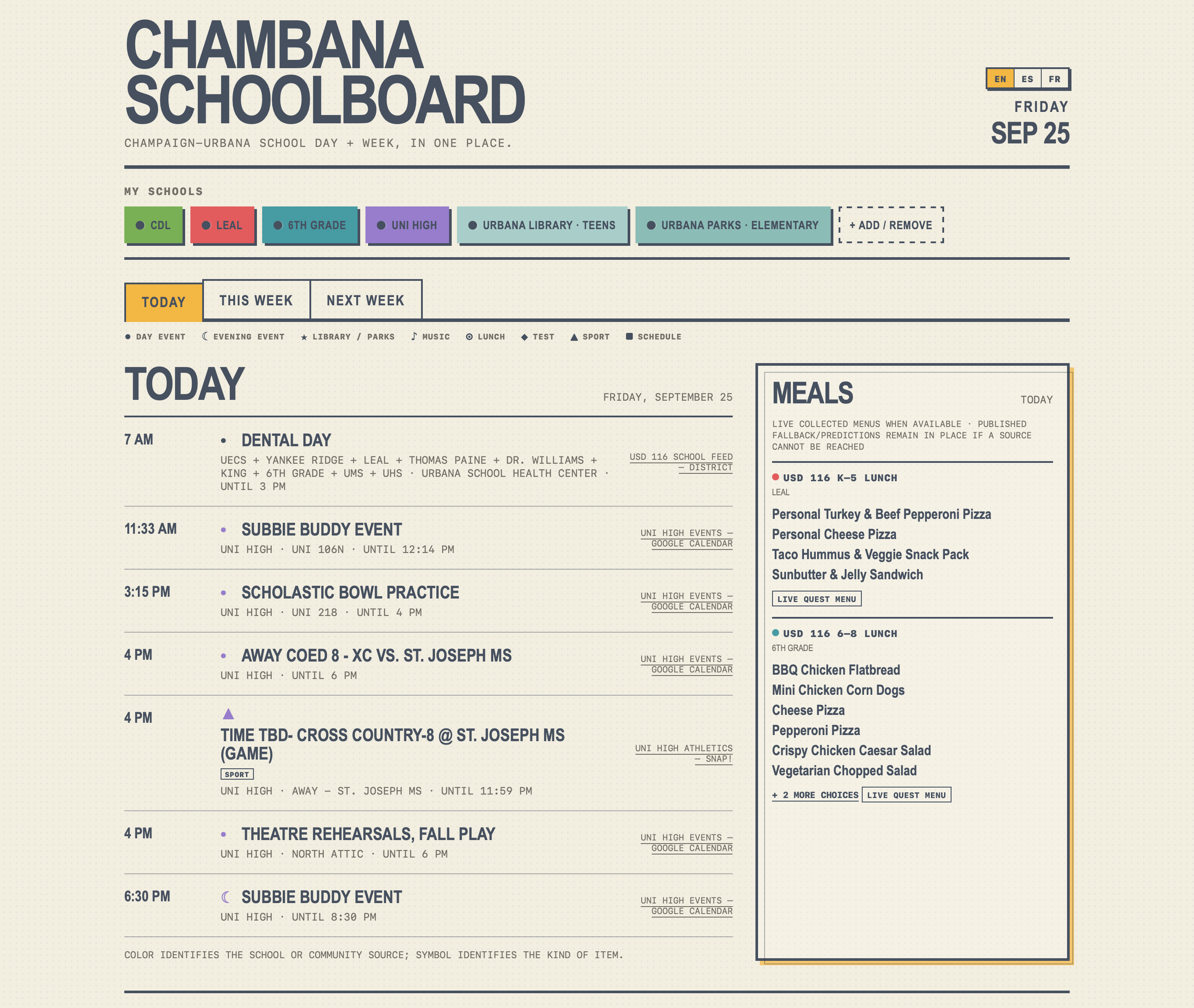
www.chambanaschoolboard.com is a project I started because I was tired of navigating the school lunch website every day (so many drop down menus, so many clicks) and wanted to be able to open a page and see what was being served in multiple schools at the same time.
I started by using an AI agent to scan the lunch calendars and figure out the cycle for them and also how the vendor handled inservice days where lunch wouldn’t be served. Did it skip a day in the cycle or pause it? The first iteration of the site was generated using HTML, the date, and the lunch dataset. It was so easy that I began to think about how to gather all of my children’s school calendars in one place. And, of course, after learning how to do that, it seemed natural to try to collect all of the local school calendars in one place for other parents who might have children in different schools or who might be working in one district and sending children to the other one. And, shouldn’t it translate the entries into French and Spanish?
40-60 hours later…
The website was at a point where it worked fairly reliably and I made it live at the link above. I used AI to write collectors in Python for each calendar source. The website itself uses a logic of inclusion and exclusion for calendar events rather than interpreting calendar sources (AI wrote the code, but the website does not run using AI). This meant that most of those hours were spent with me typing things back to the agent, like, “We’re missing first line of all of these entries. It isn’t being parsed correctly,” and adjusting the inclusion criteria to keep things families don’t need to know out (staff meetings) and including the events they do need to know about.
One of the more interesting problems to solve was that of translation. I noticed that in general the AI defaulted to collecting more information rather than less, meaning that I had to tell it that we did not need to look 400 days ahead for a site that would only show a couple of weeks worth of data. When I was still working on the static HTML version of the site, it was collecting calendar data 20 and 30 years into the future because some schools schedule certain events as repeating indefinitely.
So, when it came to translation, the agent suggested that I look at various 3rd party translation services because that’s apparently how many websites get translated. It then said I was being cheap when I said I would not spend any more money on the site after buying the domain.
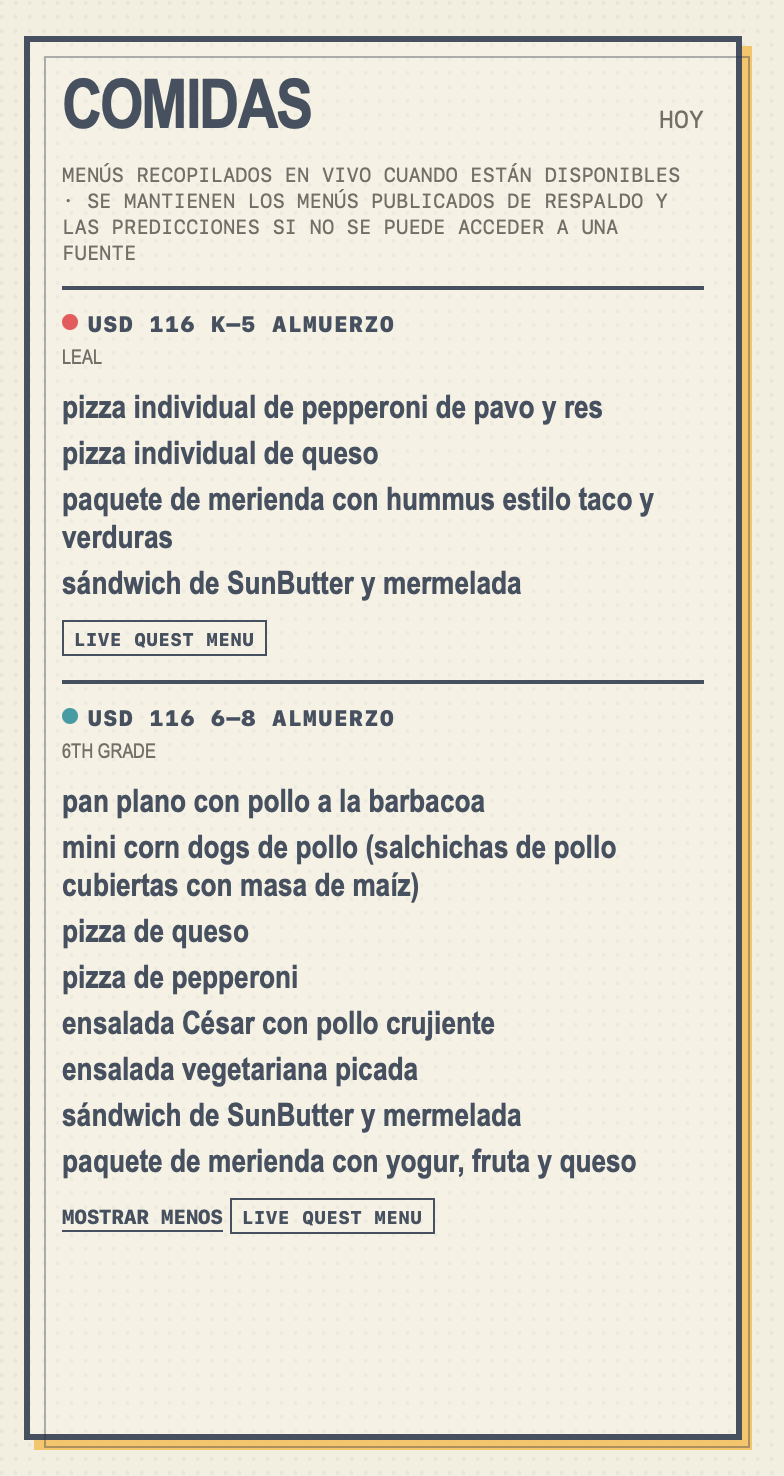
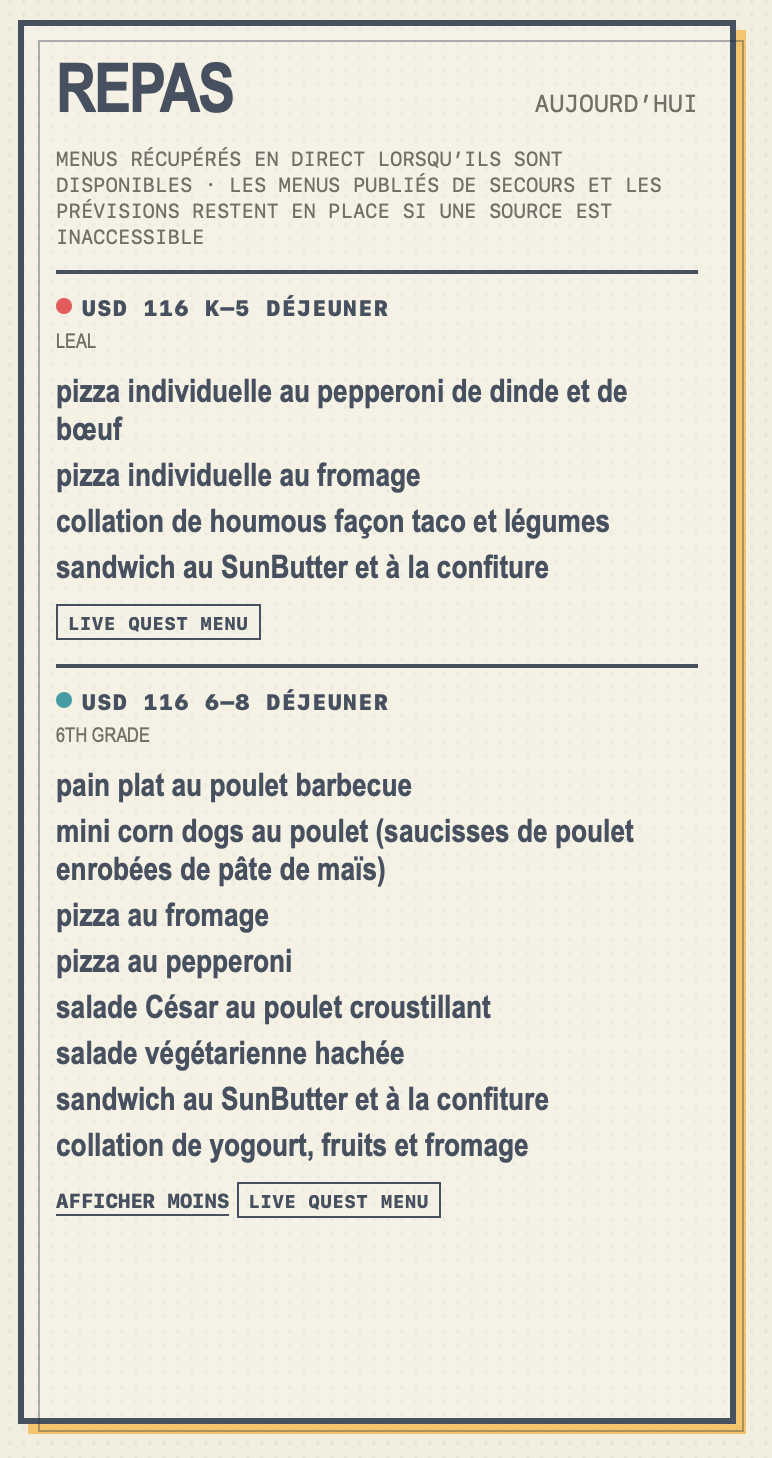
Instead, I asked how feasible it would be to include in the architecture of the site a trilingual dictionary of words and phrases. After all, how many unique calendar events could there possibly be? That’s how the translation of the site functions now. It works best with the menus because they are predictable and I was able to run the Spanish menu entries by a teacher friend who is fluent and he suggested some corrections to the original translations. Another friend who is fluent in French looked at the site and made some suggestions that would make the language sound more natural. But, the translations are still works in progress and I’ll continue to try to refine the calendar entries.
All in all, it’s been useful to me and the feedback from others has been much more positive than it was to my first school-related vibe coded project (“Stressful!,” “moves to quickly,” “objectives unclear,” “why?”).
Miura Ori
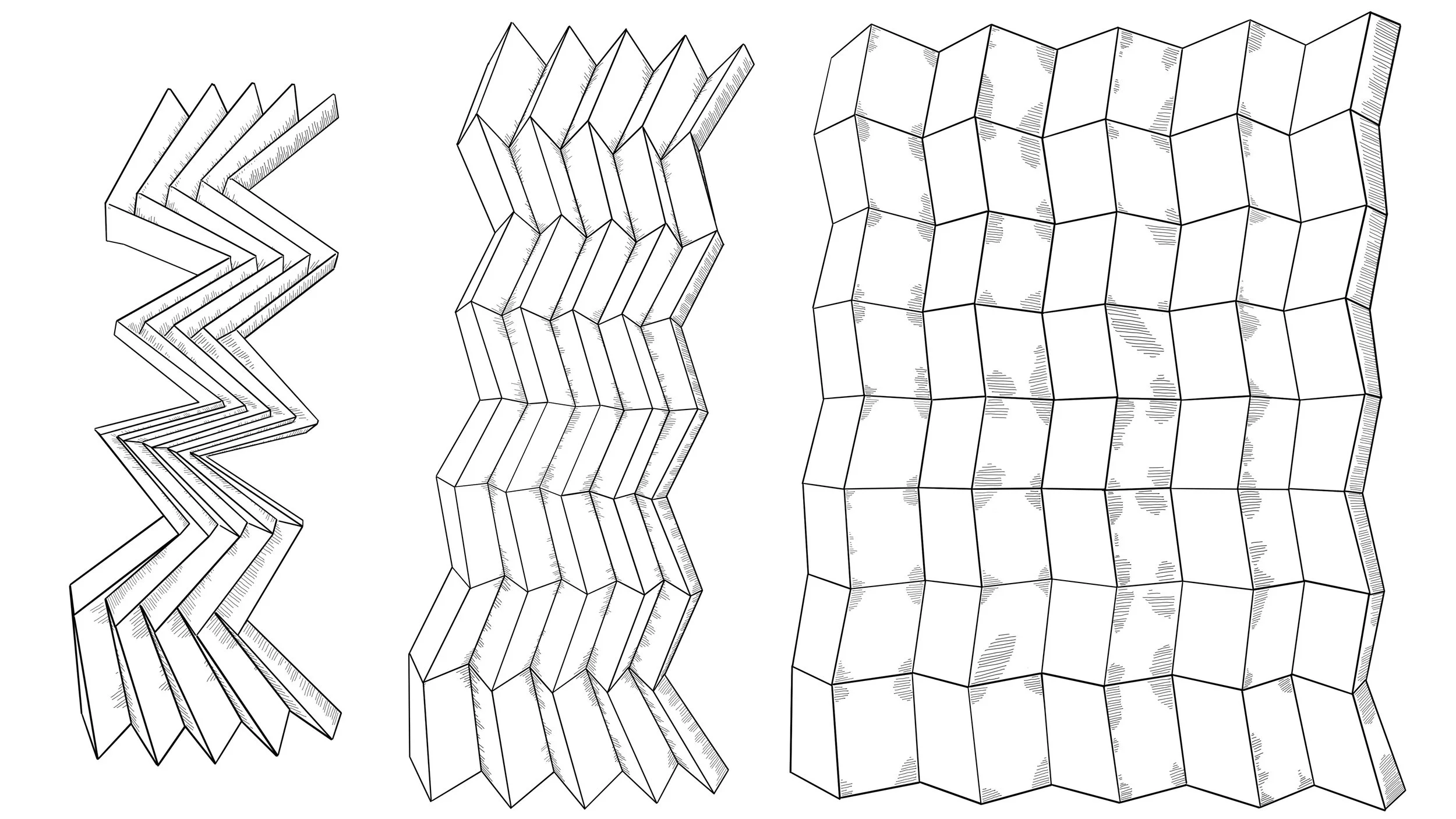
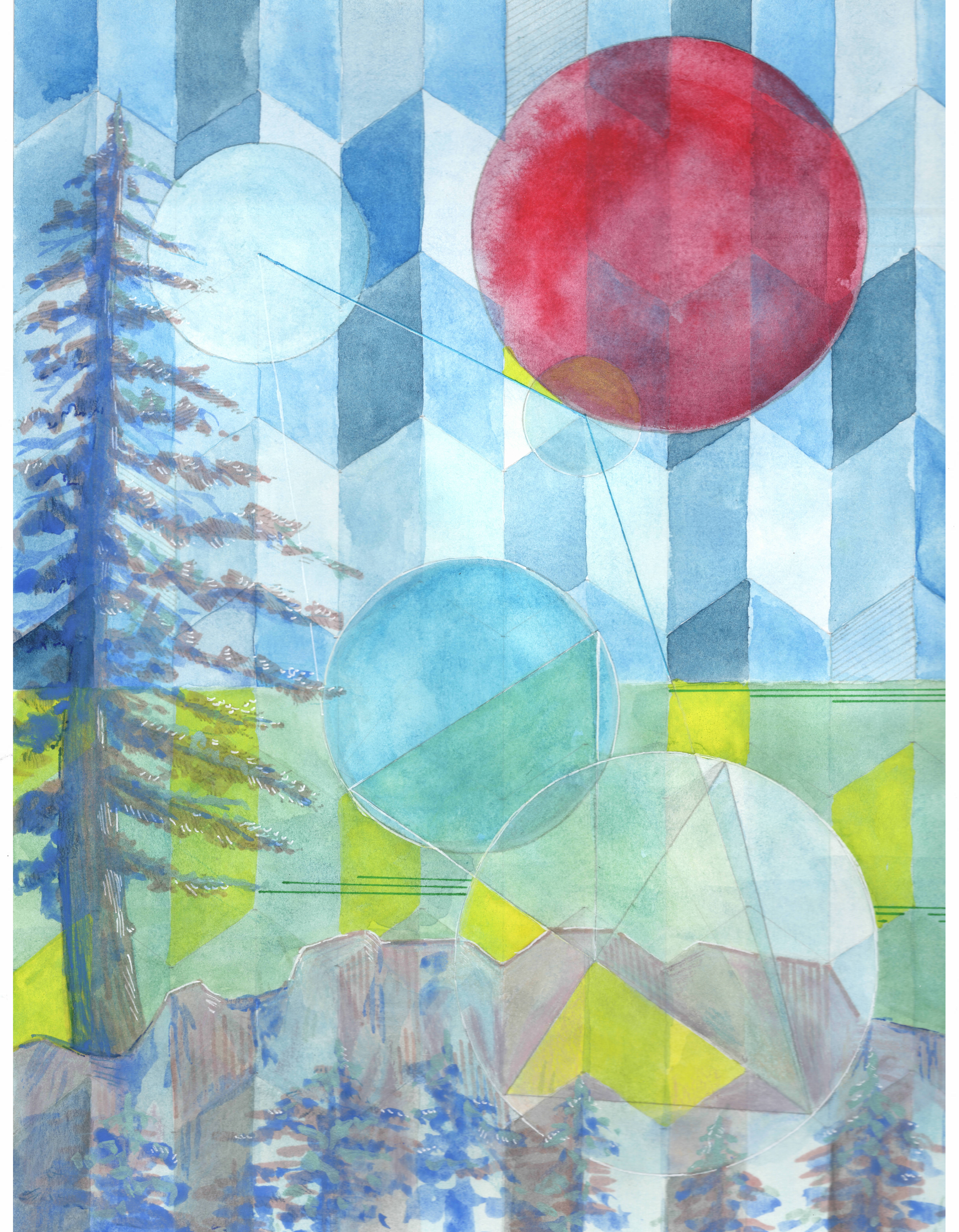
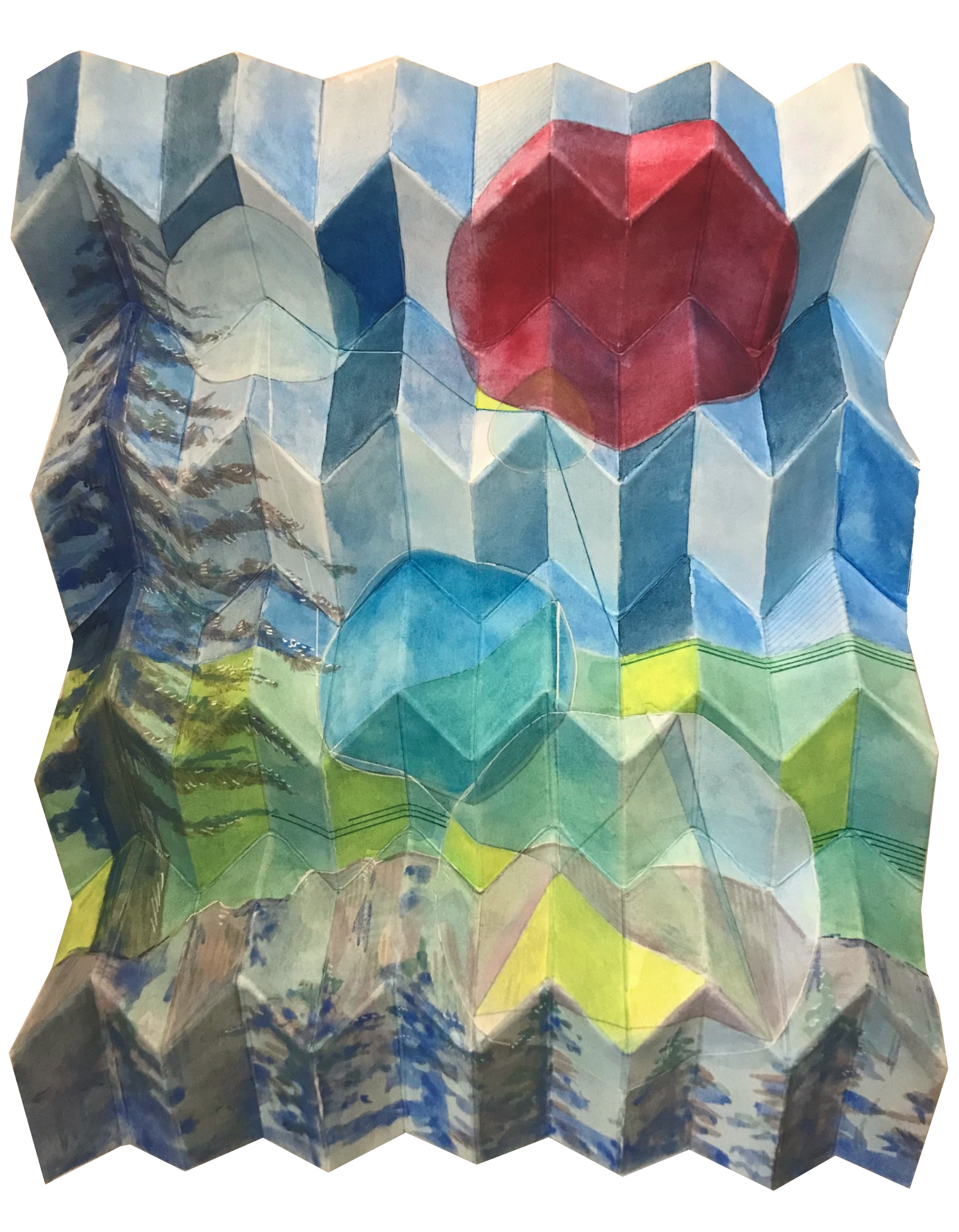
The Miura-ori is a type of folding pattern that produces an auxetic material, meaning that as it stretches, it becomes wider rather than narrower. This simple version is described as a superior method of folding maps, as it puts less stress on the vertices and the folds do not want to reverse themselves.
Erdos Numbers
I sometimes moonlight as a math teacher or tutor and was having a discussion with some students about Erdos numbers while we looked at a graphic that represented exponential growth. Erdos was a famously collaborative mathematician who left behind many, many coauthors. I explained to the group that mathematicians and sometimes other academics keep track of their Erdos numbers.
“Do you have an Erdos number?”
“Yes.” The kids started passing me their math workbooks to sign. “Guys, this doesn’t count as coauthoring. Anyway, you don’t want to have a 5 or a 6—that’s not a great number,” I told them.
The following day, one kid said he might have an Erdos number because he wrote a story with another kid and that kid’s dad was a scientist and he probably had an Erdos number.
“Did your friend coauthor with his dad?”
“Uh, no.”
“Then your friend doesn’t have an Erdos number.” I told the group they should just learn a lot math before all the 1s and 2s retire and then try to find someone to write with when they grow up. Of course, that feels very far away when you are 10 or 11.
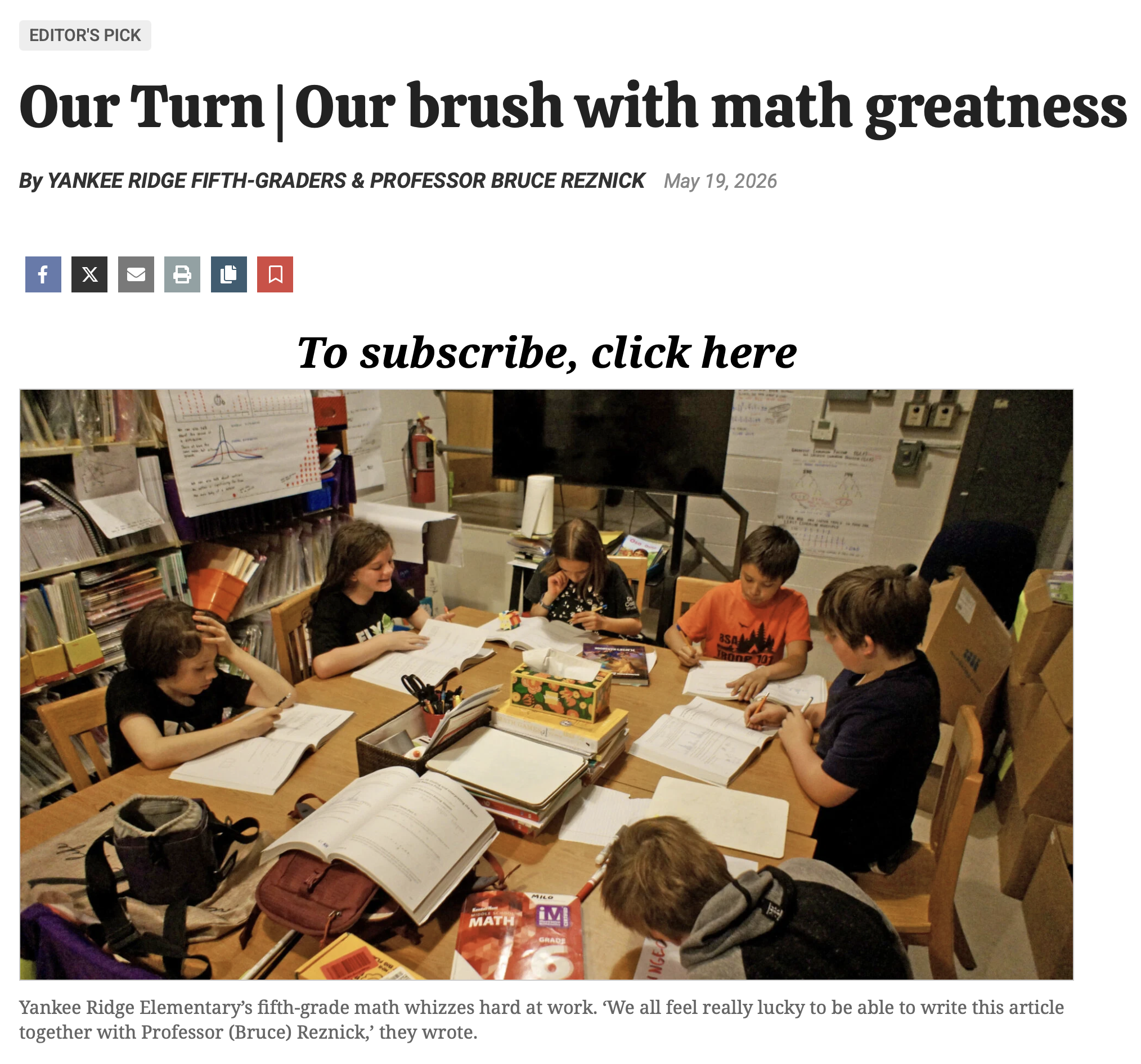
So, after thinking about it on my walk home, I reached out to an emeritus professor of mathematics who I know a little and asked if he might be willing to coauthor an article with the kids about his experiences meeting and working with Erdos. Professor Reznick met Erdos as a student and later as a professor and has an Erdos number of 1 (and a low Kevin Bacon number as well). He was willing to help, so I emailed the editor of the local paper to see if he’d like to run such an article. The parents and school were on board, and so the kids began to work on their questions for Professor Reznick.
They met the professor for the first time in person after the article came out and had a very nice hour with him. He showed them Pascal’s triangle and they asked him about Erdos’s ping pong skills.
The Wolf
Commission
A copy of the painting Agnus Dei by Francisco de Zurbarán was previously on display in a dining room. The patron requested an image of a wolf to replace the previous work and wanted something that nodded to the idea that the ram had been eaten by the animal. The piece needed to be completed in 3 days. A friend made the frame on short notice.
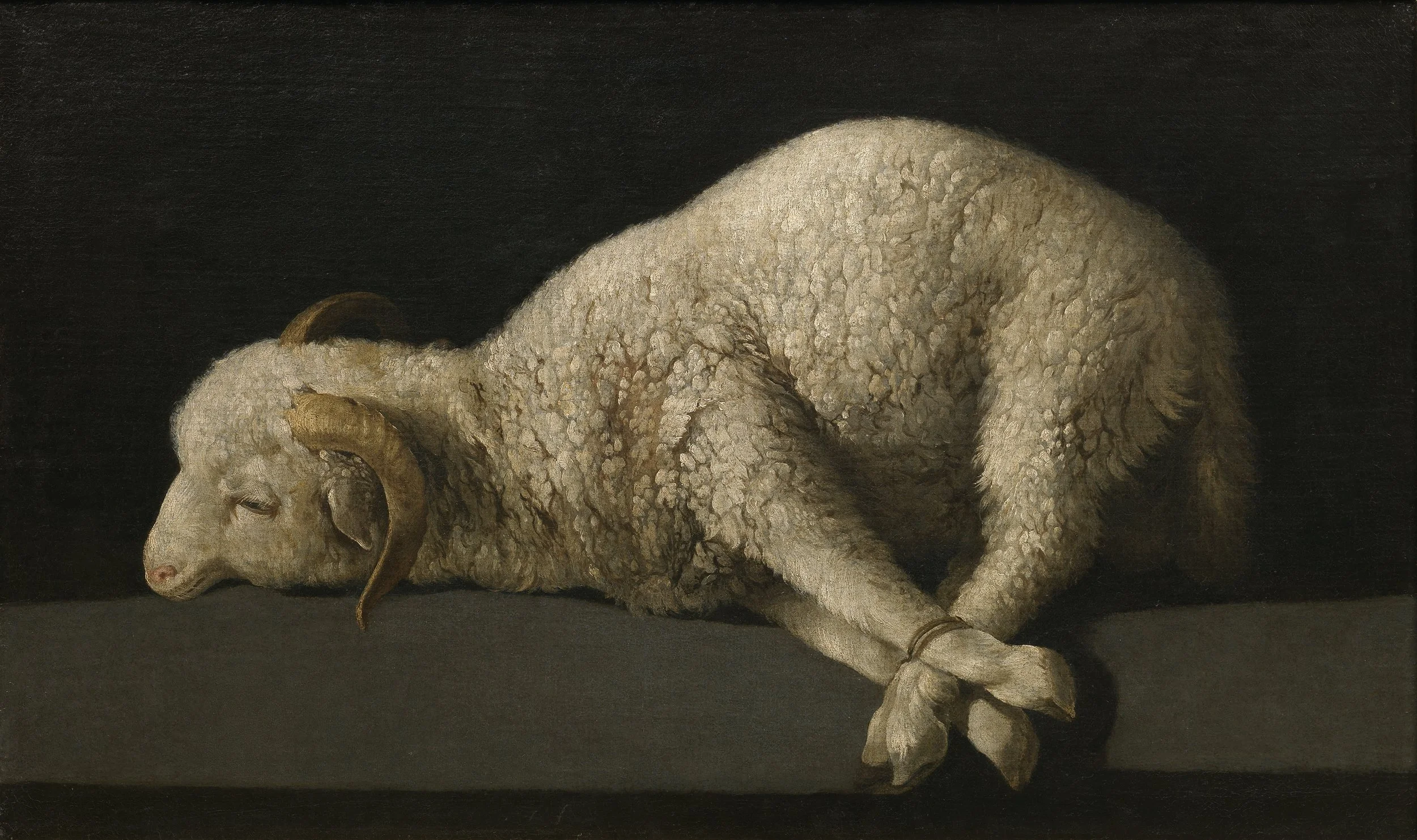
Agnus Dei by Francisco de Zurbarán.
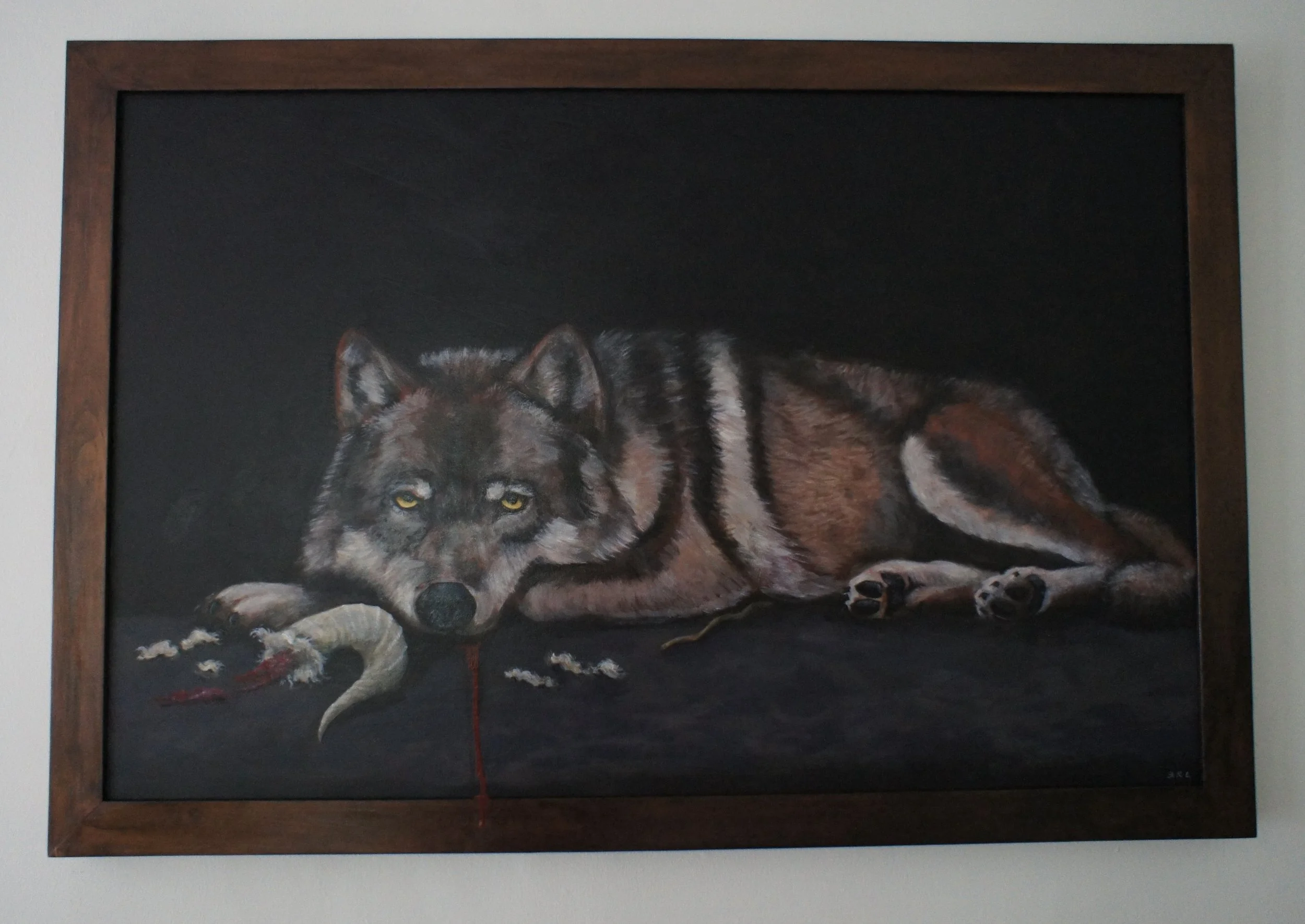
The Wolf